- English
- Afrikaans
- שפה עברית
- Cymraeg
- беларускі
- Hrvatski
- Кыргыз тили
- Kurdî
- IsiXhosa
- Zulu
- Punjabi
- Somali
- O'zbek
- Հայերեն
- Sundanese
- Español
- Português
- русский
- Français
- 日本語
- Deutsch
- tiếng Việt
- Italiano
- Nederlands
- ภาษาไทย
- Polski
- 한국어
- Svenska
- Malay
- বাংলা ভাষার
- Dansk
- Suomi
- Pilipino
- Türkçe
- Gaeilge
- العربية
- Indonesia
- Norsk
- český
- ελληνικά
- український
- Javanese
- فارسی
- नेपाली
- Burmese
- ລາວ
- Қазақша
- Македонски
- Română
- Srpski језик
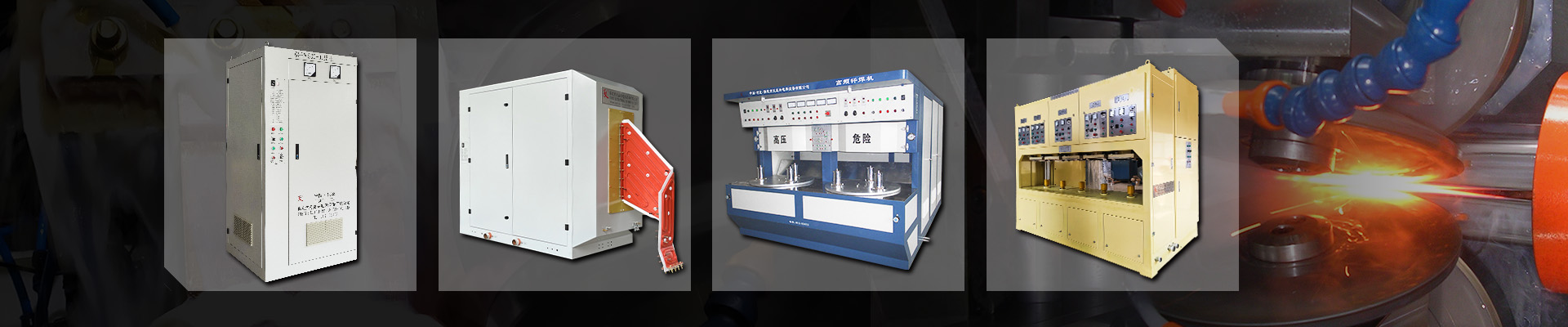
Why Is Solid State High Frequency Pipe Welder Essential for Modern Tube Manufacturing?
In the modern steel tube and pipe manufacturing industry, production efficiency and welding precision directly affect product quality, operational costs, and customer satisfaction. A Solid State High Frequency Pipe Welder has become one of the most important technologies for manufacturers seeking stable weld seams, lower energy consumption, and higher automation levels. This article explains how this equipment works, why it matters, common customer concerns, key selection criteria, maintenance methods, industrial applications, and future trends. Whether you are upgrading an existing tube mill or building a new production line, understanding this technology can help you make better investment decisions and improve long-term profitability.

Table of Contents
- 1. What Is a Solid State High Frequency Pipe Welder?
- 2. How Does High Frequency Welding Technology Work?
- 3. Why Are Manufacturers Replacing Traditional Welders?
- 4. Key Benefits of Solid State HF Pipe Welders
- 5. Common Problems Solved by Modern HF Welders
- 6. Main Components and Their Functions
- 7. Industrial Applications of HF Pipe Welding Machines
- 8. How to Choose the Right Pipe Welder
- 9. Maintenance Tips for Long-Term Stability
- 10. Energy Efficiency and Cost Reduction
- 11. Automation and Smart Manufacturing Trends
- 12. Why Weld Quality Matters in Competitive Markets
- 13. Future Development of HF Welding Technology
- 14. Frequently Asked Questions
- 15. Final Thoughts
1. What Is a Solid State High Frequency Pipe Welder?
A Solid State High Frequency Pipe Welder is a specialized industrial welding system used in tube and pipe manufacturing lines. It uses high-frequency electrical current to heat the edges of metal strips before pressure welding them into continuous pipes. Compared with traditional vacuum tube welding systems, solid state technology offers higher efficiency, lower maintenance requirements, and more stable output.
These machines are widely used for producing carbon steel pipes, stainless steel tubes, structural pipes, water pipes, automotive tubes, and many other welded products. Manufacturers prefer solid state systems because they can achieve consistent welding performance while reducing downtime and energy consumption.
Main Characteristics:
- High conversion efficiency
- Fast welding speed
- Stable heat control
- Reduced power loss
- Compact system structure
- Lower operating cost
2. How Does High Frequency Welding Technology Work?
The working principle of high frequency welding is based on electromagnetic induction and skin effect. When high-frequency current passes through the pipe edges, resistance heating occurs rapidly at the seam area. The heated edges are then squeezed together under pressure rolls, forming a strong metallurgical bond.
Unlike conventional arc welding methods, high frequency welding does not require filler materials. This makes the process cleaner, faster, and more suitable for mass production environments.
| Process Stage | Function |
|---|---|
| Strip Forming | Metal strip is shaped into a tubular form |
| HF Current Application | High-frequency current heats pipe edges |
| Squeeze Welding | Pressure joins heated edges together |
| Cooling | Weld area cools rapidly for strength |
| Finishing | Pipe surface and weld seam are refined |
Because the heat is concentrated only at the welding seam, the surrounding material experiences minimal thermal deformation. This improves overall dimensional accuracy and mechanical properties.
3. Why Are Manufacturers Replacing Traditional Welders?
Traditional vacuum tube high-frequency welders were once widely used in the pipe manufacturing industry. However, modern manufacturers face increasing pressure to improve efficiency, reduce energy consumption, and maintain consistent product quality.
Solid state welders address many limitations of older systems. Vacuum tube systems often require complex maintenance, generate excessive heat, and consume more electricity. Solid state equipment offers a more reliable and environmentally friendly alternative.
Major Reasons for Upgrading:
- Higher production efficiency
- Reduced maintenance downtime
- Improved weld consistency
- Lower electricity consumption
- Compact equipment footprint
- Enhanced automation integration
Modern industrial facilities require continuous operation and precise process control. Solid state high frequency welding technology supports these goals effectively.
4. Key Benefits of Solid State HF Pipe Welders
One of the biggest advantages of solid state high frequency pipe welders is their ability to balance speed and precision simultaneously. Manufacturers can increase output without sacrificing weld integrity.
| Benefit | Impact on Production |
|---|---|
| Fast Welding Speed | Increases daily production capacity |
| Energy Saving | Reduces operational expenses |
| Stable Output | Minimizes defective products |
| Low Maintenance | Decreases downtime frequency |
| Compact Design | Saves factory space |
| Automation Compatibility | Improves production management |
In highly competitive industries, even small improvements in efficiency can significantly affect profitability. That is why many tube mill operators invest in advanced welding systems.
5. Common Problems Solved by Modern HF Welders
Manufacturers often encounter production issues such as unstable weld seams, excessive burrs, overheating, or inconsistent pipe dimensions. Solid state welders are specifically designed to solve these operational challenges.
Common Customer Pain Points:
- High rejection rates caused by weak weld seams
- Frequent machine failures
- Rising electricity costs
- Production interruptions
- Difficulty maintaining weld quality at high speed
- Complex maintenance procedures
By using digital control systems and optimized power conversion technology, modern welders can maintain stable output even during long production cycles.
6. Main Components and Their Functions
Understanding the internal structure of a solid state high frequency pipe welder helps manufacturers maintain equipment more effectively and improve production stability.
| Component | Main Function |
|---|---|
| Rectifier Cabinet | Converts AC power into DC power |
| Inverter Module | Generates high-frequency current |
| Transformer | Transfers electrical energy efficiently |
| Cooling System | Maintains stable operating temperature |
| Control System | Monitors and adjusts welding parameters |
| Inductor and Impeder | Focuses current at welding point |
High-quality components directly influence system lifespan and welding consistency. Reliable manufacturers use advanced semiconductor devices and intelligent protection systems to ensure operational safety.
7. Industrial Applications of HF Pipe Welding Machines
Solid state high frequency welders are widely used across many industrial sectors. Their flexibility allows manufacturers to produce pipes with different sizes, thicknesses, and materials.
- Construction steel pipe production
- Automotive exhaust tubing manufacturing
- Oil and gas transportation pipes
- Furniture tubing production
- Mechanical structural tubing
- Water supply pipe manufacturing
- Greenhouse steel pipe production
- Industrial fluid transportation systems
Industries requiring high-speed mass production especially benefit from the efficiency of high frequency welding technology.
8. How to Choose the Right Pipe Welder
Choosing the correct solid state high frequency pipe welder depends on several important production factors. Buyers should evaluate both current production requirements and future expansion plans.
Key Selection Factors:
- Pipe diameter range
- Wall thickness requirements
- Production speed targets
- Power capacity
- Cooling system efficiency
- Automation compatibility
- After-sales support quality
- Spare parts availability
Many manufacturers also prioritize long-term technical support. Working with an experienced supplier can reduce installation risks and improve operational efficiency.
Tenyes Electrothermal Equipment Co., Ltd. provides advanced welding systems designed for stable performance, energy efficiency, and modern tube mill integration.
9. Maintenance Tips for Long-Term Stability
Proper maintenance is essential for maximizing equipment lifespan and reducing unexpected downtime. Even high-performance welding systems require regular inspection and cleaning.
| Maintenance Item | Recommended Action |
|---|---|
| Cooling Water System | Check water quality and flow regularly |
| Electrical Connections | Inspect for loose terminals |
| Inductor Components | Replace worn parts promptly |
| Dust Cleaning | Keep internal cabinets clean |
| Power Modules | Monitor temperature conditions |
Preventive maintenance can significantly reduce repair costs and extend equipment operating life.
10. Energy Efficiency and Cost Reduction
Rising electricity prices have made energy efficiency one of the most important concerns for pipe manufacturers. Solid state technology greatly improves electrical conversion efficiency compared with older vacuum tube systems.
Because less energy is wasted as heat, factories can reduce utility costs while maintaining high output levels. Improved power factor performance also contributes to lower overall operating expenses.
Cost Saving Advantages:
- Reduced electricity consumption
- Lower cooling requirements
- Less maintenance spending
- Fewer replacement components
- Improved production efficiency
11. Automation and Smart Manufacturing Trends
Modern manufacturing facilities are increasingly adopting automated production systems. Solid state high frequency welders can easily integrate with digital control platforms and industrial automation networks.
Smart monitoring systems allow operators to track welding parameters in real time, improving quality control and reducing human error. Advanced alarm systems also help prevent production failures before they occur.
As Industry 4.0 technologies continue to develop, intelligent welding systems will become even more important in competitive manufacturing environments.
12. Why Weld Quality Matters in Competitive Markets
Poor weld quality can lead to structural failure, customer complaints, and product recalls. In industries such as construction, transportation, and oil pipelines, welding reliability is extremely important.
High-quality weld seams improve pipe strength, leak resistance, and long-term durability. Manufacturers with consistent product quality often gain stronger market reputation and higher customer retention rates.
| Quality Factor | Production Impact |
|---|---|
| Uniform Weld Seam | Improves structural strength |
| Stable Heating | Reduces material damage |
| Low Burr Formation | Enhances surface finish |
| Precise Control | Minimizes production defects |
13. Future Development of HF Welding Technology
The future of solid state high frequency welding technology focuses on greater efficiency, intelligent automation, and environmentally friendly production. Manufacturers are investing in systems with faster digital response, remote monitoring capabilities, and improved power density.
Artificial intelligence and data analysis may also play an increasing role in predictive maintenance and automatic process optimization.
As global demand for high-quality steel pipes continues to grow, advanced welding equipment will remain a critical part of modern industrial manufacturing.
14. Frequently Asked Questions
Q1: What materials can be welded using a solid state HF pipe welder?
These machines are commonly used for carbon steel, stainless steel, alloy steel, and other conductive metal materials.
Q2: Is high frequency welding suitable for large-scale production?
Yes. High frequency welding technology is specifically designed for continuous high-speed industrial production lines.
Q3: How does solid state technology reduce maintenance?
Solid state systems eliminate many fragile vacuum tube components, reducing wear, overheating, and replacement frequency.
Q4: Can the machine support automated production systems?
Yes. Most modern solid state HF welders can integrate with PLC systems, digital monitoring platforms, and automated production controls.
Q5: Why is cooling important in HF welding systems?
Proper cooling maintains stable electrical performance, protects internal components, and extends machine lifespan.
15. Final Thoughts
A Solid State High Frequency Pipe Welder is no longer simply an optional upgrade for tube manufacturers. It has become a key production technology that supports higher efficiency, stable weld quality, lower operational costs, and smarter manufacturing integration.
Companies investing in advanced welding systems gain important advantages in product quality, manufacturing consistency, and long-term competitiveness. Selecting the right equipment supplier is equally important for ensuring reliable performance and professional technical support.
Tenyes Electrothermal Equipment Co., Ltd. continues to provide advanced high frequency welding solutions for modern tube and pipe manufacturing industries worldwide.
Contact Tenyes Electrothermal Equipment Co., Ltd. today to discuss your project requirements, improve production efficiency, and receive professional technical support tailored to your manufacturing needs.